
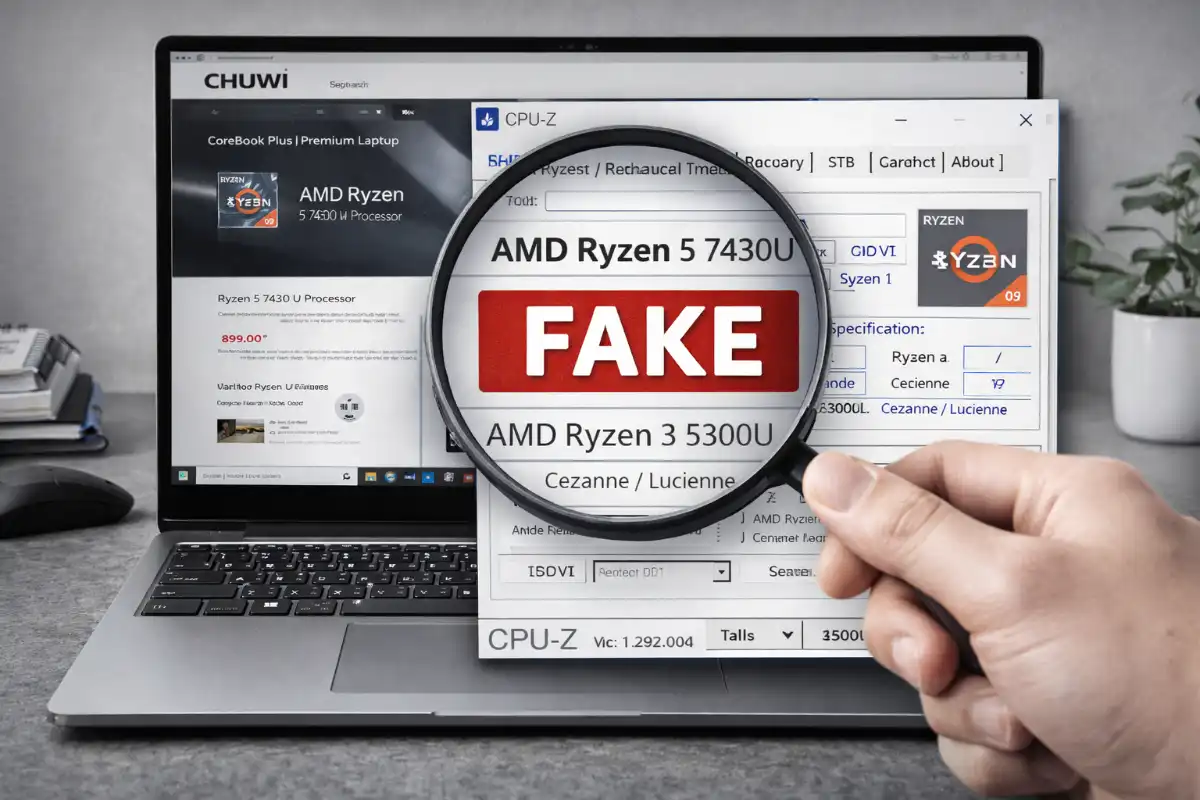
As the laptop market evolves, so do the needs of consumers. The growing importance of cost-effective computing solutions creates opportunities for new brands and increases competition among established manufacturers. However, recent reports have raised concerns about hardware fraud. One of the most discussed cases is CPU fraud, next round: Chuwi CoreBook Plus with alleged AMD Ryzen 5 7430U fraud at Play.
The current discussion around the Chuwi CoreBook Plus laptop has attracted the attention of tech reviewers and buyers. Reports claim that some devices were marketed with certain processors, but buyers discovered different hardware components inside their systems.
The Chuwi CoreBook Plus is advertised with an AMD Ryzen 5 7430U processor, a relatively new chip designed for efficient everyday computing performance. However, investigations suggest that some units may not contain the advertised processor.
Because of this situation, the tech community is actively discussing CPU fraud, the next round: Chuwi CoreBook Plus with alleged AMD Ryzen 5 7430U fraud at Play. This article explains the issue in simple terms, explores the potential impact on consumers, and highlights why hardware transparency is important in the technology industry.
What is the Chuwi CoreBook Plus?
Before discussing the controversy surrounding CPU fraud, next round: Chuwi CoreBook Plus with supposed AMD Ryzen 5 7430U also fraud victims, it is useful to understand what the Chuwi CoreBook Plus actually is.
The Chuwi CoreBook Plus is a mid-range laptop designed for productivity and general everyday use. Chuwi is a Chinese technology company known for producing affordable laptops and tablets. The CoreBook Plus is intended to deliver good specifications compared with other laptops in a similar price category.
The laptop typically includes a high-definition display, a lightweight chassis, a newer generation AMD CPU, and solid-state drive storage. These features make the device suitable for web browsing, office work, and media consumption.
The goal of the system is to provide a laptop that is simple to use for everyday computing. The operating system and software environment are designed to remain simple, allowing users to focus on their tasks without unnecessary distractions.
The Processor is The Core of The Controversy
The controversy described in CPU fraud, next round: Chuwi CoreBook Plus with supposed AMD Ryzen 5 7430U also impacted focuses mainly on the processor.
The laptop is advertised with the AMD Ryzen 5 7430U, a processor belonging to AMD’s Ryzen mobile series, which is designed for thin and lightweight laptops.
The Predicted Performance of The Processor
The Ryzen 5 7430U offers several advantages including efficient power consumption, strong multitasking performance, and integrated graphics suitable for everyday tasks such as light photo editing and video playback.
Overall, the processor is suitable for general computing, including web browsing, document creation, and video streaming. The chip is designed to make everyday computing easy and smooth for most users. Its performance is considered simple and reliable for general consumers.
The Reports
The controversy surrounding CPU fraud, next round: Chuwi CoreBook Plus with supposed AMD Ryzen 5 7430U also affected began after hardware reviewers and users examined the laptop more closely.
During hardware analysis and system testing, some reviewers discovered discrepancies in the processor identification information. Instead of identifying the advertised processor, certain tools suggested that the laptop might be running a different CPU configuration.

Why it Matters
When consumers purchase laptops, they expect the hardware specifications to match the manufacturer’s claims. If the processor specification differs from what was advertised, it may change expectations regarding performance and value.
Consumers prefer when hardware specifications are clear, accurate, and easy to understand. They also want the purchasing process to remain simple and consistent.
Addressing the Confusion Around Identifying CPUs
The situation described in CPU fraud, next round: Chuwi CoreBook Plus with supposed AMD Ryzen 5 7430U also affected also highlights how complex CPU identification can sometimes be.
Modern processors include built-in identifiers that allow software tools to detect the exact CPU model. However, identification tools may occasionally show different information depending on firmware, system configuration, or software interpretation.
Reasons That Explain This
Several possible explanations could explain the discrepancy, including incorrect firmware labeling, changes in processor identifiers, or differences in hardware configuration.
Investigations into the issue are still ongoing. The main goal is to determine whether the issue is a technical error, misconfiguration, or something more serious.
Why It is Important To be Honest About Hardware
The case described in CPU fraud, next round: Chuwi CoreBook Plus with supposed AMD Ryzen 5 7430U also affected highlights the importance of honesty and transparency in the technology industry.
When buyers evaluate a laptop, they carefully compare its hardware specifications with the price and expected performance. The most important hardware components include the processor, memory, storage, and graphics.
If any of these specifications are inaccurate, customers may feel misled or disappointed. Companies should ensure that hardware specifications are clear, accurate, and easy to verify.
When manufacturers provide transparent product information, customers can compare products easily and make informed decisions. Transparency also helps build trust between manufacturers and consumers.
Consequences of Losing Consumer Trust
The reports surrounding CPU fraud, next round: Chuwi CoreBook Plus with supposed AMD Ryzen 5 7430U also affected demonstrate how quickly consumer trust can be damaged.
Laptop buyers rely heavily on accurate product information when choosing a device. If hardware specifications appear unclear or misleading, buyers may hesitate to purchase the product.
Trust in specifications
Consumers expect manufacturers to provide honest and accurate specifications. When trust exists between customers and manufacturers, the purchasing process becomes much more simple and confident.
Steps to be taken by Buyers
Based on the situation described in CPU fraud, next round: Chuwi CoreBook Plus with supposed AMD Ryzen 5 7430U also affected, buyers can take several steps before purchasing a laptop.

Research Before You Buy
Reading independent reviews from trusted technology websites and reviewers can help identify potential issues.
Verify Specifications
Certain software tools can display detailed information about a laptop’s processor, memory, and other hardware components.
Trusted Sellers
Buying from authorized retailers increases the likelihood that the product is genuine and correctly specified. These steps help make the purchasing process safe and simple.
Industry Response and Chuwi’s Position
After reports about CPU fraud, next round: Chuwi CoreBook Plus with supposed AMD Ryzen 5 7430U also affected appeared online, the technology community began discussing the issue widely.
Manufacturers often respond to such reports by providing technical explanations, firmware updates, or clarifications. As investigations continue, additional information about the Chuwi CoreBook Plus may become available.
Clear communication from manufacturers helps keep information simple, making it easier for customers to understand the situation.
The Laptop Industry’s Broader Issues
The case described in CPU fraud, next round: Chuwi CoreBook Plus with supposed AMD Ryzen 5 7430U also affected also reflects a larger challenge in the technology industry.
Consumers today are more informed and analytical when purchasing electronics. They often research hardware specifications, performance benchmarks, and product reviews before buying a device.
Companies that provide clear, accurate, and transparent specifications gain a stronger competitive advantage. Clear information helps customers understand products easily and allows them to make confident purchasing decisions.
Conclusion
The controversy surrounding CPU fraud, next round: Chuwi CoreBook Plus with supposed AMD Ryzen 5 7430U also affected demonstrates how important hardware transparency is in the laptop industry.
Reports suggest that some units of the Chuwi CoreBook Plus may contain processors different from the advertised model, leading to investigations and discussions within the technology community.
Educating consumers and providing clear, accurate hardware specifications are essential for maintaining trust in the technology market. Manufacturers have an increasing responsibility to ensure that product information is honest, simple, and easy to verify.
As the technology sector continues to grow, maintaining transparency and trust between companies and consumers will remain one of the most important factors for long-term success.
