
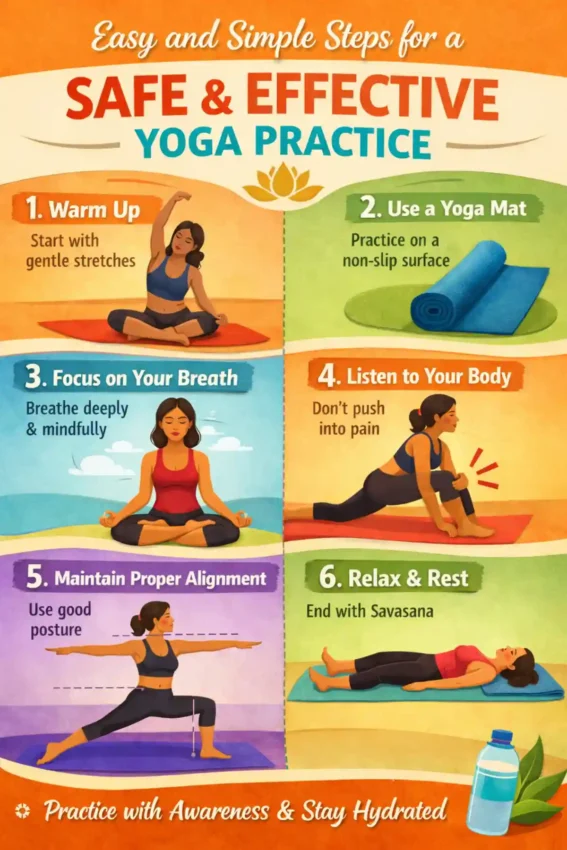
The practice of Effective Yoga is more than just exercise—it is a holistic practice that nurtures your physical, mental, and spiritual well-being. Recently, yoga has been featured in many health and wellness news articles because it is an easy and simple practice that anyone can do to improve health and reduce stress. Understanding the right order of yoga steps can make a difference in how much you improve.
In this article, we will discuss the steps for yoga, the best time to do Effective Yoga, and how to make yoga easy for beginners.
The Best Times to Practice Yoga
The timing of yoga can affect its results. While you can practice Effective Yoga at any time, certain times are better for specific goals:
1. Morning Yoga: Appreciate Your Day
Morning yoga is perfect for starting your day with focus and energy.
Benefits: Wakes up your muscles, improves clarity, and enhances mood.
Best For: Increasing energy, clearing your mind, and reducing stress.
Recommended Poses: Sun Salutations, Downward Dog, Cat-Cow, and Child’s Pose are easy and simple ways to wake the body.
2. Afternoon Yoga: Deal With Stress
Afternoon yoga is ideal for overcoming the midday slump.
Benefits: Relieves tension from sitting or standing and improves circulation.
Best For: Stress relief and mental clarity for the rest of the day.
Recommended Poses: Pigeon Pose, Warrior II, Seated Forward Fold to open your chest and hips.
3. Evening Yoga: Rest
Evening yoga helps your body unwind and prepares you for sleep.
Benefits: Calms the nervous system, releases muscle tension, and improves sleep quality.
Best For: Reducing stress, improving sleep, and increasing flexibility.
Recommended Poses: Child’s Pose, Legs Up the Wall, Savasana, and deep breathing exercises like Pranayama.
4. Yoga Anytime: Your Time, Your Schedule
No matter your schedule, Effective Yoga can fit in. Consistency is more important than timing.

Benefits: Improves overall health, posture, and relieves stress.
Ideal Use: Helps create a daily yoga habit, even with limited time.
Suggested Poses: Sun Salutations, standing stretches, or seated stretches for a quick energy boost.
Easy and Simple Steps for Yoga
Yoga is most effective when done safely and mindfully. Here are easy steps to improve your practice:
1. Set Your Goals
Focus on one or two goals, such as reducing stress, increasing flexibility, or improving a specific pose.
Why It’s Important: Clear goals help you stay focused and get the most from your practice.
- Pay Attention to Your Breathing
Stay aware of your breath during yoga. Deep breathing keeps you calm and energized.
Why It’s Important: Proper breathing ensures you save energy and maintain focus during poses.
3. Avoid Hurting Yourself
Maintaining proper posture prevents injury.
Why It’s Important: Good alignment maximizes benefits and keeps your body safe.
- Do Enough to Progress
Balance strength, flexibility, and movement. Avoid overdoing it or skipping essential steps.
Why It’s Important: Gradual progress ensures a safe and effective yoga practice.
5. Support Your Practice With Props
Blocks, straps, and bolsters help with correct alignment and flexibility.
Why It’s Important: Props strengthen your practice and make poses safer and more accessible.
6. Stay Present and Mindful
Focus on your breath, body, and feelings. Ignore outside distractions.
Why It’s Important: Mindfulness enhances your connection to Effective Yoga and supports mental clarity.

7. Consistency is Key
Even a 10–20 minute daily practice can be very effective over time.
Why It’s Important: Regular practice improves flexibility, strength, and reduces stress.
8. Know When to Rest
Listen to your body and take breaks when necessary. Child’s Pose or Savasana is perfect for resting.
Why It’s Important: Rest prevents injuries and allows your body to recover.
9. Stay Hydrated
Drink water before, during, and after Effective Yoga especially in hot environments.
Why It’s Important: Hydration improves muscle function and enhances your range of motion.
10. End With Relaxation
Finish your session with Savasana or another relaxing pose.
Why It’s Important: This helps your mind and body absorb the benefits of the practice and feel refreshed.
FAQs About Yoga
Q1: What is the best time for yoga?
Morning yoga energizes the body, afternoon yoga reduces stress, and evening yoga improves sleep.
Q2: How long should a yoga session be?
Beginners should practice 20–30 minutes, while advanced practitioners may practice 60 minutes or more.
Q3: What if I feel pain during yoga?
Stop immediately, rest, use props, or consult a teacher to adjust your practice.
Q4: Do I need a yoga teacher?
Not required, but a teacher helps ensure proper alignment and prevents injuries, especially for beginners.
Q5: Can yoga help with weight loss?
Yes. It strengthens the body, reduces stress, and promotes a mindful lifestyle.
Conclusion
Effective Yoga is an easy, simple, and rewarding practice that improves your physical, mental, and emotional health. By practicing at the best times, following these easy steps, and staying consistent, you can enhance your flexibility, strength, and overall well-being. Start with basic poses, stay mindful, and remember that yoga is a personal journey—focus on progress, not perfection, and enjoy the benefits every day.
