
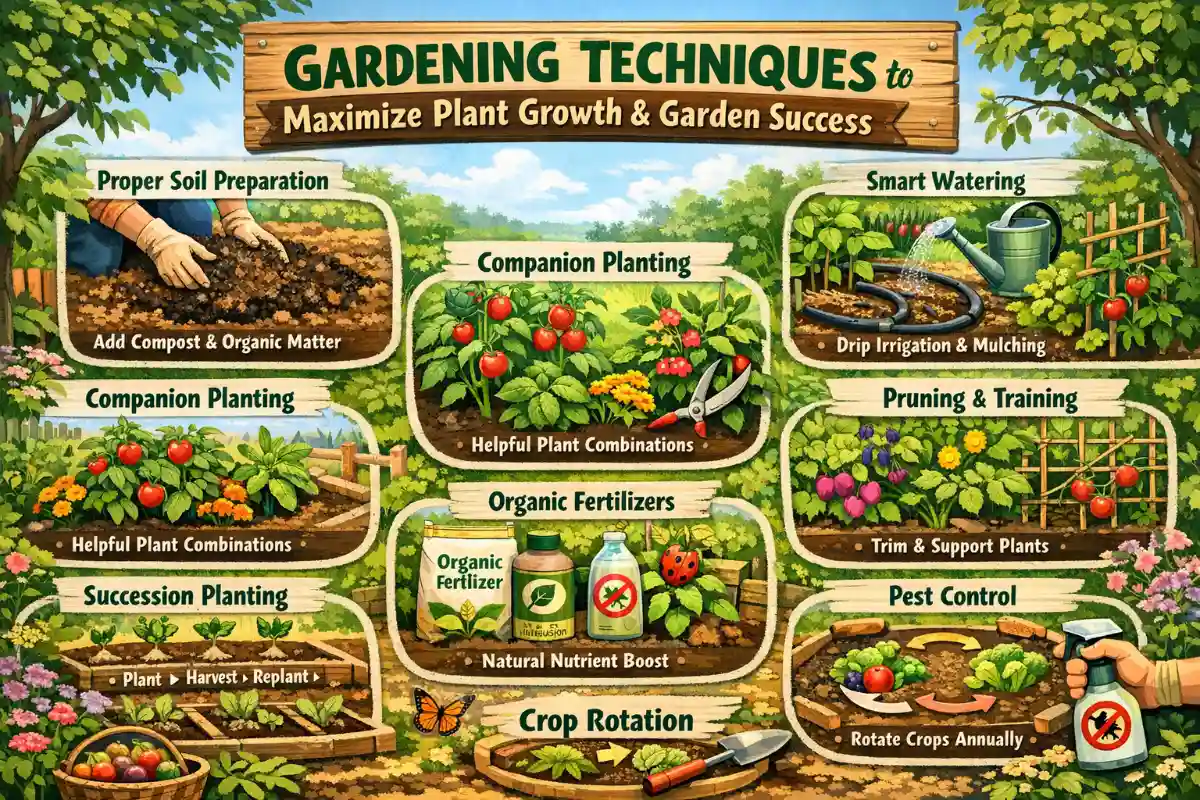
As we see in recent articles by gardening professionals and environmental advocates, home gardening and the focus on growing healthier food and creating greener spaces has become popular trends in recent years. News reports also indicate that gardeners are using more natural methods, caring for their soil, and implementing smart watering techniques to improve plant growth while avoiding chemicals. The good news is that DIY gardening does not require a gardening genius—with the right methods and a little patience, anyone can enjoy a thriving garden.
This blog is inspired by practical tips that are easy to follow and require little to no experience, keeping things simple.
10 Natural Techniques To Enhance Plant Growth
1. The Soil
The foundation of healthy plant growth is healthy soil. Many successful gardeners focus on soil health.
The most organic and simple way to improve soil is to increase its organic content with compost and/or organic matter. Benefits include stronger root systems, allowing plants to grow fully and healthily.
2. Watering Techniques
One of the biggest mistakes gardeners make is overwatering. Recent gardening news recommends watering deeply but less frequently. This helps plants strengthen their roots, encouraging them to grow deeper instead of remaining weak near the surface.
3. Light Considerations
Sunlight is vital for healthy plant growth. It is one of the most important factors for a thriving garden.

Research which plants require full sun, partial shade, or full shade to ensure optimal growth.
4. Fertiliser Choices
The latest reports show that compost tea and manure are being preferred over traditional fertilisers. These feed plants gradually, causing less harm to the soil while promoting healthy growth.
5. Keeping The Soil Cool
Using mulch helps keep soil temperature low and reduces water requirements. Mulching also prevents weeds, allowing plants to get more nutrients, and saves watering time.
6. The Need For Pruning
Pruning redirects energy to the healthiest parts of the plant. Syndicated gardening news suggests that regular and accurate pruning boosts flowers and fruit production.
- Select Appropriate Species
Native plants thrive in local conditions. Many newspaper articles recommend using native species because they grow faster and require less care, ensuring maximal growth with minimal issues.
8. Increase Air Circulation
Fresh air is essential for healthy, productive plants. Poor air circulation can cause moisture build-up and disease. Proper spacing of plants promotes airflow and strong growth.

9. Implement Natural Pest Control
Experts agree that chemical pest control is inferior to natural methods such as neem oil and companion planting. These approaches protect your garden while keeping it safe and healthy.
10. Practise Perseverance
Research shows that gardening results take time. Practices may not produce immediate results, but over weeks and months, consistent care leads to a thriving garden.
Relevance of These Strategies
Recent research highlights the importance of home gardening for community health and environmental well-being. Using simple, easy methods reduces chemical use and saves money, while promoting natural garden management, practical irrigation, and soil health improvement.
FAQs
- When will I notice changes in my plants?
With proper maintenance, changes are usually visible in 2–4 weeks. - Is compost more effective than chemical fertilizers?
Yes, compost improves soil quality better than chemical fertilizers and promotes sustainable growth. - Is this suitable for beginners?
Yes, these steps are uncomplicated and beginner-friendly. - Do indoor plants require similar care?
Yes, indoor plants need similar care but in smaller, manageable quantities. - What is the biggest mistake?
Overwatering is the biggest mistake, as it stunts plant growth.
Conclusion
Recent gardening news shows that growing healthy plants relies more on a gardener’s skills than tools. Focus on your soil, remain patient, and with time, your garden will thrive.
