
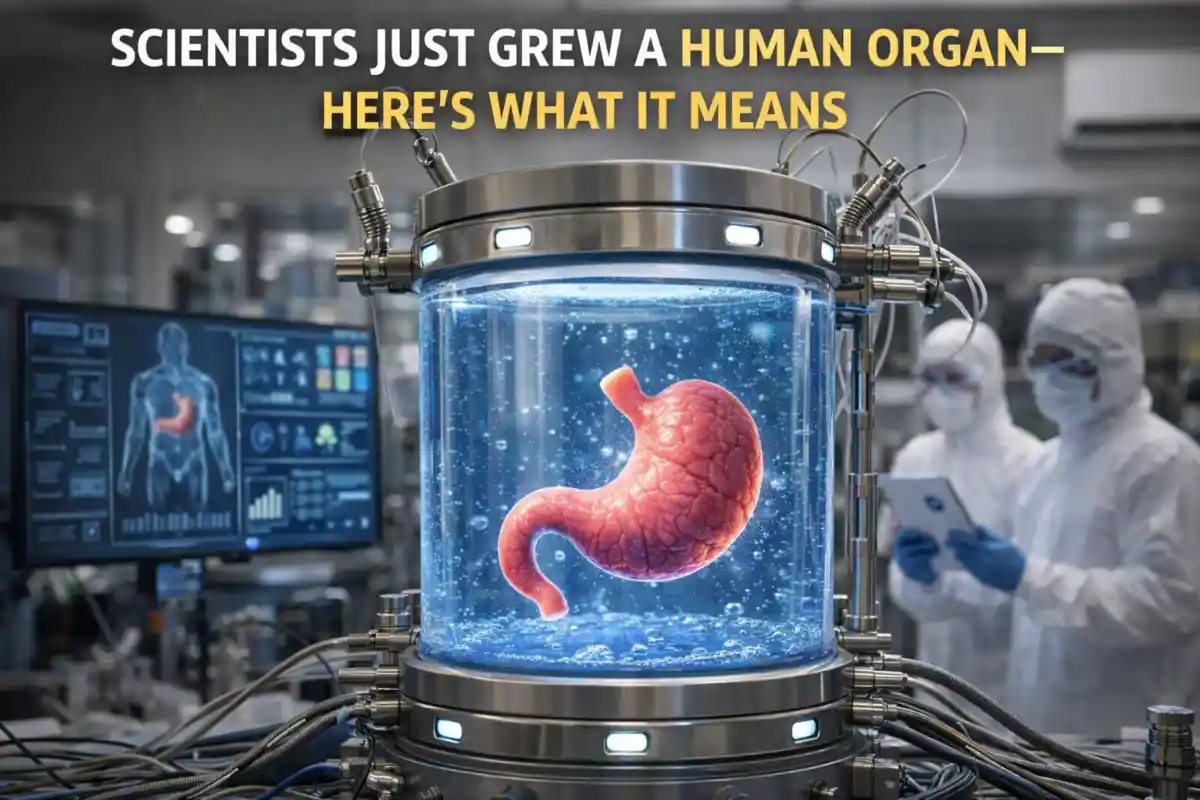
Breakthroughs in medicine have historically solved long-standing issues in the field. The most recent is the creation of functioning human organs within a laboratory, marking a major step closer to addressing the serious issue of organ shortages. Currently, people in need of organ transplants face the threat of never receiving an organ in time to save them. However, this advancement in organ creation has the potential to change the norms of organ transplant surgery, bringing us closer to a reality where we can grow organs in a laboratory.
What Have the Scientists Discovered?
Most recently, scientists have created a laboratory grown esophagus, an organ responsible for carrying food to the stomach. By utilizing innovative methods in regenerative medicine and tissue engineering, scientists successfully developed human organ-like structures. The laboratory grown organ mimics the tissue structure of a natural organ, demonstrates the ability to integrate with a biological system, and possesses the ability to function as a real esophagus. The most important factor is that the organ is fully functional, making this breakthrough highly significant.
What Are the Steps to Growing an Organ in the Lab?
Growing an organ is extremely complex and uses advanced technologies such as stem cells, where researchers use unique cells that can transform into different types of human tissue. It also involves scaffolds, which act as a framework guiding the organ into the correct shape. Another method is 3D bioprinting, where bio-printers build organs layer by layer. Additionally, bioreactors are used to create environments that simulate the human body and support proper tissue growth.
All of these technologies work together to mimic the function of a living organ.
What Makes This Breakthrough Important
These innovations are reshaping the future of medicine in several ways. First, they help solve the organ shortage crisis, as many patients die waiting for transplants. Lab-grown organs could eliminate waiting lists entirely. Second, they reduce the risk of organs rejection, since organs created from a patient’s own cells are less likely to be rejected. Third, they could reduce the overall cost of healthcare over time, even though the technology is currently expensive.

This is not just a medical innovation, but a major step toward saving lives. Using advanced techniques in tissue engineering and regenerative medicine, scientists were able to grow a structure that behaves like a real human organ.
Challenges Still Ahead
Despite the progress, there are still major challenges. Most lab-grown organs are still in the testing phase. It takes significant time to grow a complete organ. There is also a need for government regulation before clinical use becomes widespread. Additionally, the cost of technology remains high.
While progress is promising, widespread use is not yet near.
Why This News Is Going Viral
This breakthrough is gaining global attention because it combines advanced science, human health, and emerging technology. It has a broad impact and generates interest in topics like “lab-created organs,” “medicine of the future,” and “artificial organ creation.”
This explains why it is rapidly trending across platforms.

What Comes Next?
Researchers are now working on growing other organs such as kidneys, livers, and hearts. If successful, this could lead to a future where no one waits for a transplant, hospitals can grow organs on demand, and the human lifespan is extended.
Final Verdict
The development of a functional human organ in a laboratory is one of the greatest achievements in modern science. While it is still early, the potential is enormous. This technology could transform medicine, redefine our understanding of the human body, and save countless lives.
The future of healthcare will not just focus on treating diseases, but on rebuilding and regenerating the human body itself.
