
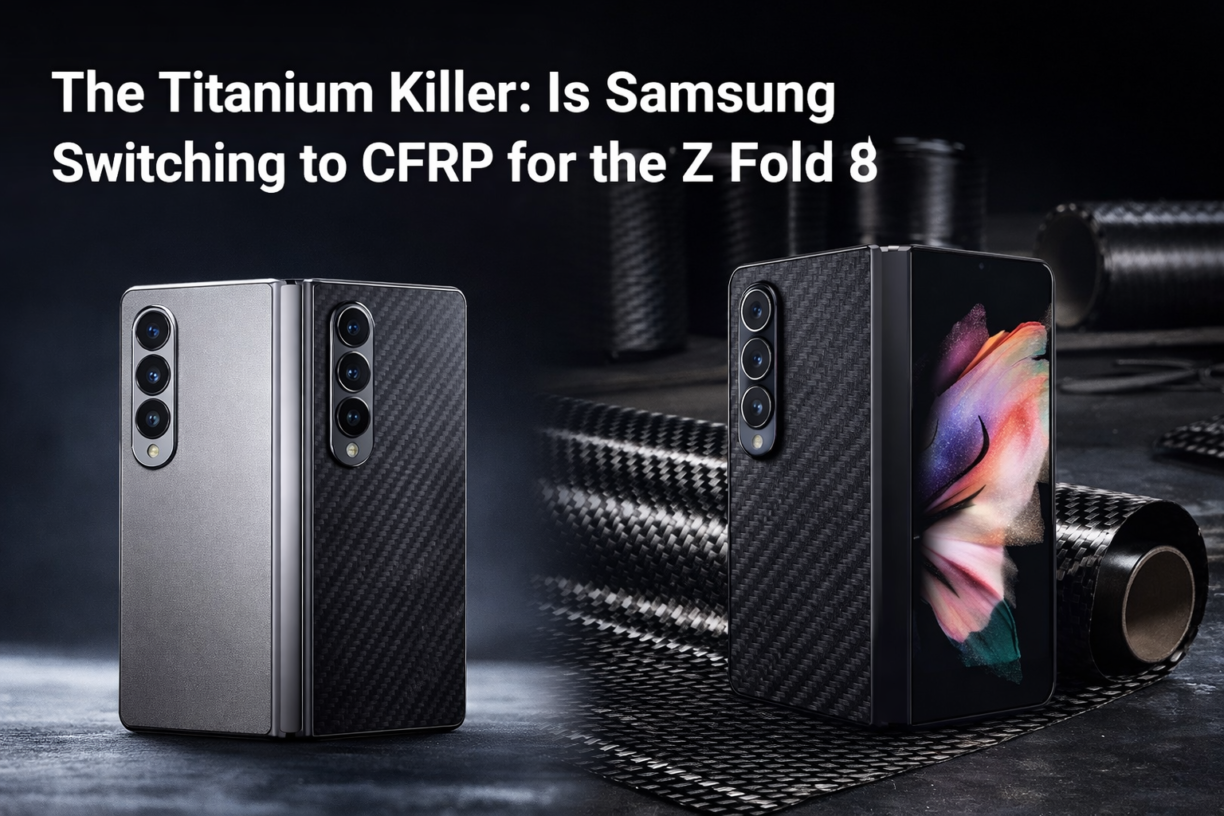
The technology used in foldable smartphones has expanded at an incredibly fast rate over the past few years. The materials used for them have been getting lighter and stronger. New CFRP (Carbon Fiber Reinforced Polymer) reports are being discussed in the world of technology. These reports are part of a project called The Titanium Killer: Samsung Switching to CFRP for the Z Fold 8. What an interesting name!
While Samsung did make some improvements to previous models, such as glass, design, and hinge, they may have some more improvements to make. The CFRP would replace titanium in the foldable phones which would be huge. The prominence of The Titanium Killer: Is Samsung Switching to CFRP for the Z Fold 8? lies in Samsung’s goal to make the foldable phones in the project as easy and comfortable to use by as many consumers as possible. The purpose of this article will be to explain simply and easily, the reports surrounding Samsung Galaxy Z Fold 8: The Titanium Killer. The first thing we’ll examine will be The Titanium Killer. Then we’ll examine what CFRP is. Finally, we’ll answer the question of whether the materials will make foldable phones stronger or will the foldable phones become weaker as a result of the new materials.
What Is CFRP and Why Is It Important?
To analyze The Titanium Killer: Is Samsung Switching to CFRP for the Z Fold 8?, we must have an idea of what CFRP means.
CFRP means Carbon Fiber Reinforced Polymer. It is an extremely strong substance and is made of carbon fibers and a plastic polymer. This combination makes it extremely strong and lightweight.
CFRP is widely used in several industries such as Aircraft manufacturing, Racing cars, High-performance bicycles, and Premium electronics. CFRP is preferred by these industries for a simple reason. It has extremely high strength and durability. CFRP has weight-keeping properties. Foldable phones will need a lightweight and easy-to-handle design. If Samsung incorporates CFRP in the Z Fold 8, it will make the phone slender and pocketable.
Why Samsung Might Replace Titanium
The query regarding The Titanium Killer: Is Samsung Switching to CFRP for the Z Fold 8? is the reason why Samsung will now consider excluding titanium. Smartphones made of titanium are appealing because they are light and sturdy. But, there are some downsides when it comes to titanium.
1. Wight Concerns
While titanium is lighter than steel it is still heavier than carbon fiber materials. Foldable phones will already have 2 displays, a hinging mechanism, and batteries. Because of this it is very important to safegaurd weight during this design phase. With a CFRP design, it also means the phone would be easy to carry and comfortable.
2. Structural Flexibility
Foldable phones will require a frame that can support the hinge while also being durably flexible. Strong structural support means that the design can be simple, and CFRP will help greatly with this.
3. Design Freedom
To help this, Samsung will be able to build a foldable device that is thinner than the competition. The result is also a phone that will be simple to hold and simple to use.
What the News Reports Suggest
Latest rumors also indicate Samsung is in the process of testing CFRP as a viable structural material candidate for the next foldable generations. This is why several tech analysts are talking about The Titanium Killer: Is Samsung Switching to CFRP for the Z Fold 8?

Leaks suggest that Samsung might incorporate CFRP in parts of the phone such as support frames, hinge reinforcements, and backing plates. This is to reduce weight while maintaining the same durability. This way the design can be kept simple while increasing performance. Although Samsung has not confirmed the change, the company is renowned for new experiments with different materials. If the rumors are accurate, the Z Fold 8 may be the first to incorporate a major change in materials for design.
How CFRP Could Improve the Galaxy Z Fold Series
If the rumors are accurate regarding The Titanium Killer: Is Samsung Switching to CFRP for the Z Fold 8?, there are several positive changes expected from the coming foldable phone.
1. Less weight
Unlike regular smartphones, foldable phones are predominantly heavier. The incorporation of CFRP will shed a big percentage of the device weight. This will make the phone easy to carry and simple to use it with one hand.
2. Enhanced durability
The carbon fiber materials are uncompromisingly powerful. They can hold their shape and withstand pressure. This is essential for a foldable device that will be opened and closed thousands of times. A more robust design increases the device’s dependability and simplicity of use over time.
3. Slimmer construction
Most people want foldable smartphones to be slimmer. CFRP composites help manufacturers keep the device strong, allowing for a thinner design. This provides a modern, clean, and simple design.
Samsung’s Strategy for the Future of Foldable Devices
The discussion on CFRP and the Z Fold 8 also ties into Samsung’s bigger picture. Korean tech giants have led the foldable smartphone market, and they keep investing in development. Their objectives are to develop lighter foldable devices, stronger hinges, better battery life, and increased durability.
Samsung’s use of CFRP will help them better achieve these goals. Engineers want foldable devices to be as simple and easy to use as traditional smartphones. Should Samsung manage to use CFRP, they will gain another advantage over their rivals.
Challenges of Using CFRP in Smartphones
In The Titanium Killer: Is Samsung Switching to CFRP for the Z Fold 8? there are challenges to be overcome.
Attributes: Is Manufacturing Complexity?
Carbon fiber materials are manufactured using advanced equipment that challenges the manufacturing and production of CFRP, increasing production costs.
Attributes: Is Repair Difficulty?
CFRP components are generally more difficult to repair than their metal counterparts. This is likely to have an impact on maintenance costs.
Attributes: Is Heat Management?
Smartphones get hot when used heavily. It is the job of the engineers to design CFRP structures to allow for proper heat control.

In all of the above challenges, however, the possible advantages may continue to outweigh the challenges at hand. Samsung is likely to consider CFRP structures to keep the device durable, easy to maintain, and give a simple user experience.
What This Surely Means For Future Foldable Phones
The Titanium Killer: Is Samsung Switching to CFRP for the Z Fold 8? will this come to fruition, we can safely say that Samsung will have the potential to impact the entire smartphone industry. Rival brands will be compelled to examine similar materials to CFRP. This will culminate in foldable phones that are Lighter, Stronger, Thinner, more comfortable, less complicated to use, and more practical to fold in everyday life.
While all are desirable, the goal will always remain the same: technology that does not require effort to use and does not require complicated understanding.
Should Users Be Excited?
For people that enjoy technology, seeing The Titanium Killer: Is Samsung Switching to CFRP for the Z Fold 8? is a treat. Finding a new material is always a positive thing, as it will show up as an improvement when it comes to the durability, the design, and the portability of a smartphone.
If Samsung manages to successfully implement CFRP for the Galaxy Z Fold 8, then that device would without exaggeration be one of the best foldable phones of the time. Moreover, it can help people adopt foldable technology easier.
Conclusion
Samsung is likely testing the idea of CFRP for foldable devices to make them less weighty and more strong. This would mean that certain parts of the phone would not be made of titanium.
Although the company has yet to announce such a decision, there are industry reports that suggest some serious testing is being done. Should these changes be made, the Galaxy Z Fold 8 will be the first device to begin a new era of foldable devices.
The ultimate objective is obvious. Samsung aims to create foldable phones that are powerful, durable, and easy to use, while not compromising on the experience being simple for the everyday user. We don’t know if the future will have CFRP, but they will definitely keep changing the types of materials present in foldable phones in the future.
