
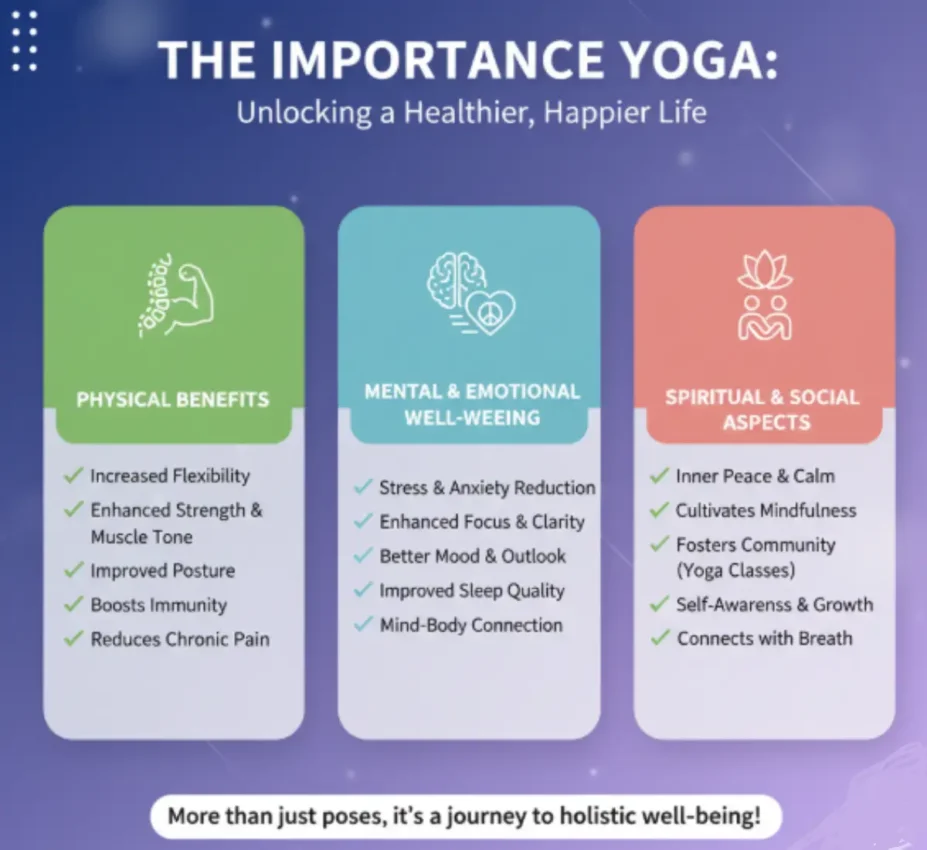
Yoga is an ancient practice with mental, emotional, and physical benefits, and it has been practiced for thousands of years. Originating in ancient India, yoga has become widely popular worldwide. Recently, health and wellness news has highlighted that starting yoga is easy and simple, whether you are a beginner or have been practicing for years.
Here, we will discuss the importance of yoga, its key benefits, and how to practice it safely to improve your overall health. Yoga provides a holistic approach to well-being, connecting your mind and body, reducing stress, and improving your body’s abilities.
1. Yoga Aids Your Health
The health benefits of yoga are widely known. With regular practice, your muscles get stronger, your posture improves, and your flexibility increases.
Greater Flexibility
One of the most famous benefits of yoga is its ability to improve flexibility. Gentle and simple stretches help relieve tight muscles and improve joint movement.
Benefit: Increased flexibility improves posture, balance, and lowers the risk of injury.
Example Poses: Pigeon Pose, Downward Dog, Forward Fold.
Builds Strength and Endurance
Yoga is also effective for building strength and endurance. Poses like Plank, Warrior, and Chair engage your arms, core, and legs, gradually toning your body.
Benefit: Stronger muscles and better endurance make daily activities easier and improve overall health.
Example Poses: Plank Pose, Tree Pose, Chaturanga.
Improves Your Posture
Practicing yoga regularly increases awareness of your body and helps release tension in the back, shoulders, and neck, especially for desk workers.
Benefit: Better posture reduces back pain, neck tension, and stress on your joints.
Example Poses: Mountain Pose, Child’s Pose, Cobra Pose.
2. Better Clarity and Focus
The benefits of yoga extend beyond the physical. It helps maintain mental health, clarity, and focus.
Helps with Stress and Anxiety
Mindful breathing and meditation activate relaxation and calm the mind.
Benefit: Reduces stress, balances mood, and improves emotional health.
Example Practices: Box Breathing and Breath Awareness.

Improves Focus and Concentration
Mental discipline combined with movement helps keep you present and attentive, enhancing your productivity.
Benefit: Better focus supports both personal and professional life.
Example Practices: Trataka (Candle Gazing Meditation) and Breath Awareness during poses.
3. Yoga Enhances Mental Health and Well-Being
Yoga improves mental and emotional health by combining breathing, meditation, and movement to promote mindfulness and stability.
Boosts Mood and Reduces Depression
Practicing yoga increases serotonin (the “feel-good” hormone), lifting your mood and reducing feelings of sadness and frustration.
Benefit: Acts as a natural mood booster and encourages emotional balance.
Example Practices: Heart-Opening Poses like Camel Pose with meditation.
Greater Self-Awareness and Acceptance
Mindfulness through yoga fosters self-reflection, self-compassion, and self-esteem.
Benefit: Supports a positive body image and a better relationship with yourself.
Example Practices: Journaling after meditation, Mindfulness Yoga, and Gratitude Practices.
4. Yoga Enhances Breathing and Lung Capacity
Yoga teaches breathing techniques (pranayama) that strengthen your lungs and improve respiratory health.
Pranayama for Lung Health: Techniques like Ujjayi Breath (Victorious Breath) and Kapalbhati (Breath of Fire) increase airflow and oxygen circulation.
Benefit: Better breathing improves lung health, energy, and athletic performance.
5. Yoga Helps You Sleep Better
For those struggling with sleep, yoga can be highly effective. Gentle poses help relax the body and calm the mind for better rest.
Restorative Poses: Legs Up the Wall, Child’s Pose, Supta Baddha Konasana.

Benefit: Better sleep quality and feeling refreshed in the morning.
Bottom Line: Practice Yoga the Right Way
While yoga is easy and simple, incorrect practice can lead to injury or little benefit.
- Don’t do poses you can’t handle: Avoid advanced poses if your body isn’t ready.
- Don’t skip warm-ups: Warming up and relaxing after practice prevents soreness.
- Don’t focus only on poses: Breathing exercises and meditation are equally important.
FAQ About Yoga
Q: What are the benefits of yoga for beginners?
A: Beginners improve flexibility, strength, posture, mental clarity, focus, and reduce stress.
Q: Can yoga help with weight loss?
A: Yes. Yoga boosts metabolism, tones muscles, and supports a healthy lifestyle when combined with a good diet.
Q: Does yoga help with anxiety and depression?
A: Yes. Mindful breathing, movement, and meditation help calm the mind and improve mood.
Q: How often should I practice yoga?
A: Beginners can start 3-4 times per week. Daily practice is ideal as you progress.
Q: Is yoga good for sleep?
A: Yes. Restorative poses and breathing exercises before bedtime help improve sleep quality.
Conclusion
Yoga is a simple and easy practice with many benefits for your mind, body, and emotions. By practicing regularly and mindfully, focusing on proper poses, breathing, and meditation, you can improve flexibility, strength, mental clarity, reduce stress, and sleep better.
Remember, the journey of this is personal. Practice with patience, focus on progress over perfection, and enjoy the countless benefits it brings to your health and mind.
