
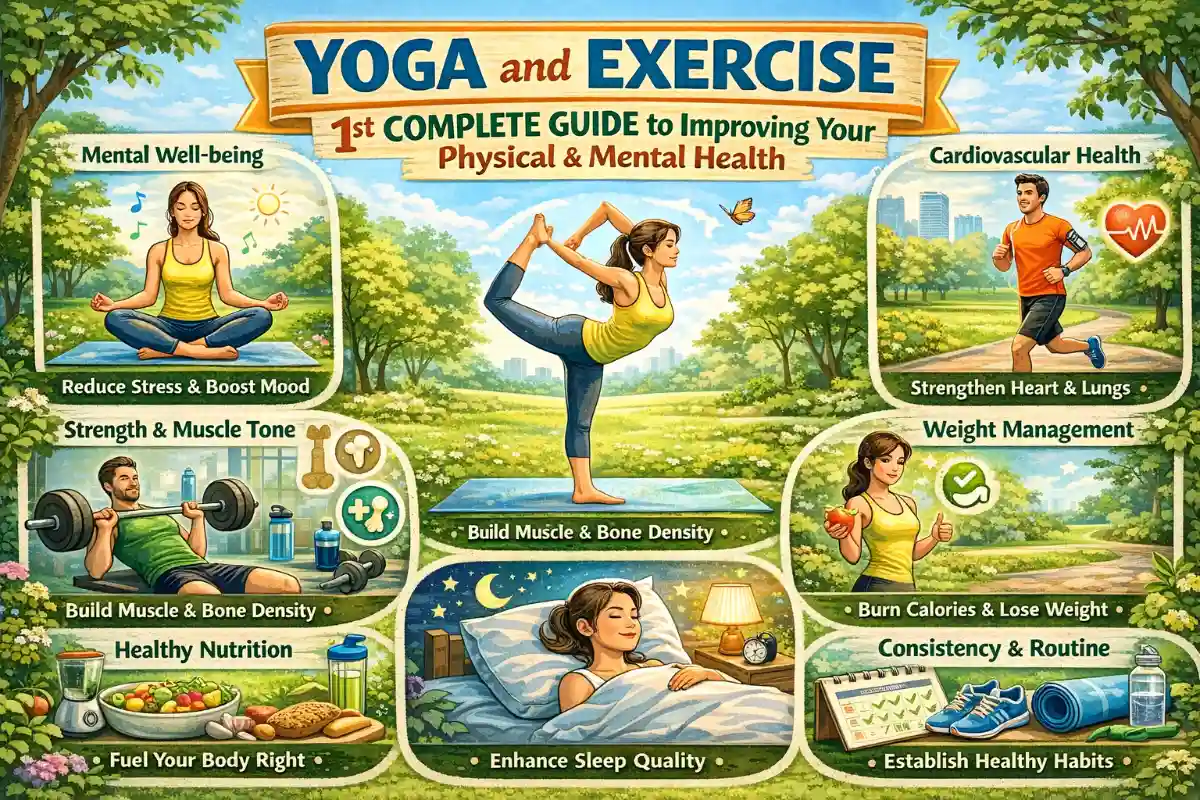
Recent wellness reports highlight a growing interest in both Yoga and Exercise. However, many people still feel unsure about which option is more beneficial for their overall health. In today’s world, maintaining physical and mental health has become essential. Staying active is now part of many people’s daily routines, and in the post-pandemic era, the increase in health and wellness discussions in the news is clear.
Both Yoga and Exercise offer many benefits, but they serve different purposes. This blog aims to explain the key points of both practices in a simple and easy way, helping readers make an informed choice that suits their daily lifestyle.
Understanding the Difference Between Yoga and Exercise
1. Focus and Purpose
Yoga and Exercise differ mainly in their purpose.
Yoga focuses on the integration of the body, mind, and breath. It encourages awareness, inner balance, and a sense of calm.
In contrast, traditional exercise mainly focuses on physical fitness. It emphasizes muscle development, endurance, speed, and weight loss. While exercise has many benefits, it usually does not include meditation or controlled breathing.
2. Strength vs Flexibility
Yoga gently stretches muscles and joints, helping reduce stiffness and improve posture. Because of its controlled and easy movements, Yoga and Exercise routines are suitable for people of all ages.
Exercise, especially strength training, focuses on building muscle power. Weightlifting and resistance workouts increase muscle mass and bone density but may not significantly improve flexibility.
3. Breathing and Mindfulness
One major reason Yoga and Exercise feel different is breathing.
Yoga uses controlled breathing techniques that calm the nervous system. This makes the practice feel easy both mentally and emotionally.
Exercise focuses on maintaining breathing rhythm to support physical effort. Calmness and mindfulness are not usually part of the routine, and breathing often supports intense activity.
4. Benefits to the Mind
Recent wellness studies suggest yoga is increasingly recommended for improving mental health. Yoga and Exercise programs often include meditation and relaxation techniques that help reduce stress, anxiety, and mental fatigue.
Exercise also benefits mental health by releasing endorphins, but relaxation is usually not the main focus. Most benefits are related to physical strength and pain management.

5. End Results in the Body
Yoga involves slow, controlled, and simple movements, making it safe for beginners and individuals with joint issues.
Exercise can be either low-impact or high-impact. Activities like running, HIIT, or heavy weightlifting can strain joints if not done correctly.
Steps Involved in Yoga Practice
Each Yoga and exercise session follows a structured flow.
Step 1: Setting an Intention
The practice begins with a moment of calm. Participants set a goal such as relaxation, flexibility, or stress relief. This keeps the session simple and focused.
Step 2: Warm-Up and Centering
Light movements and gentle breathing prepare the body. The Cat-Cow Pose is commonly used to warm up the spine.
Step 3: Sun Salutations
Sun Salutations are a popular Yoga and Exercise sequence. They combine movement and breath to engage the entire body in a smooth and easy flow.
Step 4: Main Poses
Yoga includes a variety of standing, seated, and balance poses. These poses improve strength, posture, and flexibility.
Step 5: Breathing Exercises
Breathing techniques help calm the mind and regulate energy. This step makes yoga feel effortless and deeply relaxing.
Step 6: Relaxation
The session ends with deep relaxation, allowing the body and mind to absorb the benefits of the practice.
Steps Involved in Traditional Exercise
A traditional Yoga and Exercise workout usually includes the following steps:
Step 1: Warm-Up
Light movements prepare muscles and reduce the risk of injury.
Step 2: Primary Workout
Depending on fitness goals, this may include cardio, strength training, core exercises, or HIIT workouts.

Step 3: Cool Down
Gentle movements and stretching help muscles recover and relax.
Step 4: Rest and Recovery
Rest days are important to improve performance and prevent injuries.
Which One Should You Pick?
Choose Yoga and exercise if you want calmness, stress relief, and mental clarity.
Choose exercise if your goals include weight loss, muscle building, or improved endurance.
Many health experts recommend combining Yoga and Exercise for complete physical and mental well-being.
FAQs
Is yoga better than exercise for beginners?
Yoga is often easy for beginners due to slow and controlled movements, but exercise can also be beginner-friendly with proper guidance.
Can yoga replace exercise?
Yoga improves balance and flexibility, but combining Yoga and Exercise provides better overall fitness.
How many days a week should I practice?
For best results, practicing Yoga and Exercise three to five days a week is recommended.
Is yoga safe for older adults?
Yes. Yoga is low-impact and simple to modify, making it safe for older adults.
Conclusion
For overall health, both Yoga and Exercise play an important role. Yoga improves relaxation, flexibility, and mental clarity, while exercise builds strength and endurance. Current wellness trends show the best results come from a balanced approach.
By creating an easy, simple, and sustainable routine, individuals can improve both mental and physical health. Listening to your body and staying consistent will help you decide whether yoga, exercise, or a combination of both works best for you.
