
Yoga Every Day is an age-old practice, and it has somehow managed to stay relevant to people in the present day. As seen in many recent health and lifestyle news publications, it is commonplace to report on the increased popularity of the practice in many parts of the globe. Because the services of medical practitioners and wellness specialists can become costly, and the fact that the practice of yoga can enhance your mental, emotional, and physical state, makes the practice all the more enticing. What makes Yoga Every Day appealing is that it can be practiced without heavy weights or gym facilities.
Yoga Every Day Life
Having the right attitude and an open mind toward practicing Yoga Every Day will assist in developing your balance, strength, and flexibility. A few yoga tips can help you on your journey. This bridges the gap between an ideal and a practical reality. Through yoga teaching, the teacher helps the student develop a sense of self, which in turn enhances the teacher’s own sense of self.
Your first few lessons should include more advanced poses. Keep lessons introducing powerful poses until you have mastered basic and foundational poses. The more you practice, the more you will improve. Yoga requires practice, and the goal is improvement. Slow and deliberate practice allows self-evaluation, helping the body improve. You may also find emotional release in areas of focus, enhancing physical progress. The key is to practice consistently with focus and attention.
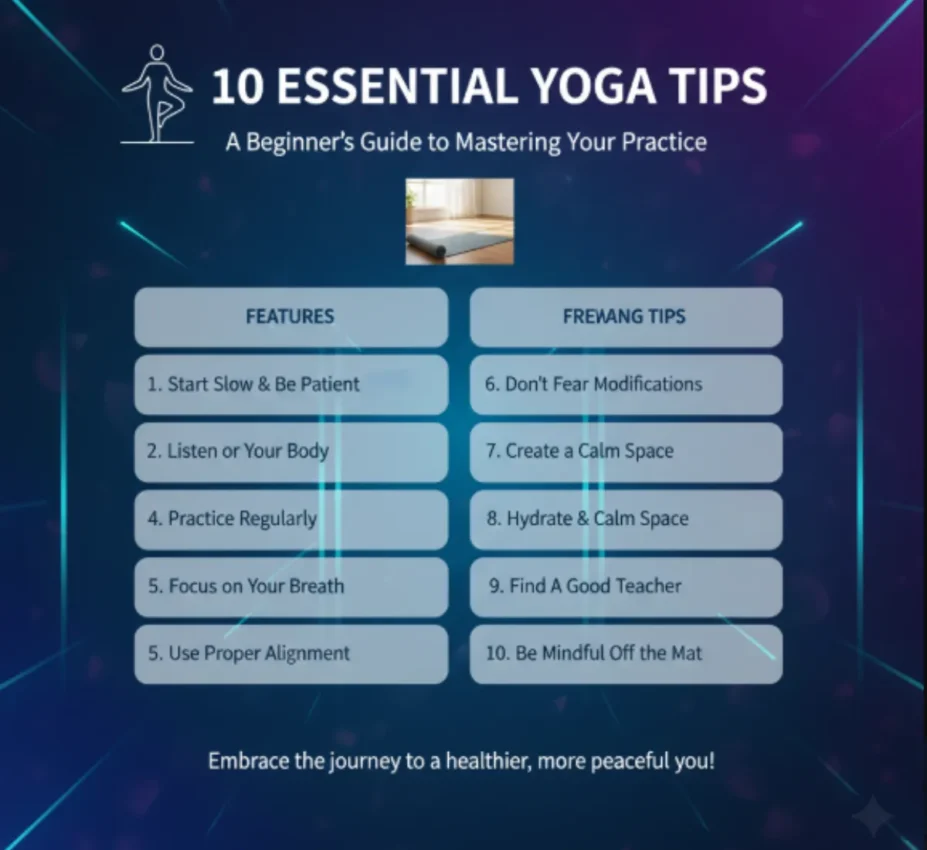
1. Always Listen to Your Body
The best advice regarding yoga from recent wellness studies is to listen to your body. Yoga should not be painful, but rather comfortable.
Simple Tip:
If something is hurting you, stop. Yoga is about compassion, not aggression.
2. Focus on Deep Breathing
One of the most critical components of yoga is breathing. Controlling your breath keeps you centered and improves flexibility.
Tips for Yoga:
Inhale through your nose and exhale through pursed lips to improve focus.
- Choose a Comfortable Space
If the environment is calming, you can direct your focus better. Studies show practicing yoga in a centered environment enhances the experience.
Easy Tip:
Use a firm, non-slipping yoga mat placed on the ground of your chosen calm space.
4. Warm-Up Before Practice
To ready your body and reduce injury risk, warm up beforehand. Sun Salutations are an effective way to warm up muscles.

Tips for Yoga:
Set aside at least five minutes for warm-up exercises to prepare your body.
5. Use Yoga Props When Needed
Yoga blocks, straps, and pads make certain postures easier. Teachers recommend props for novices.
Simple Tip:
Props aid in balance and maintaining correct body alignment.
6. Practice Yoga Regularly
Practicing yoga daily, even briefly, is better than infrequent long sessions. Staying active supports health more than sporadic exercise.
Tips for Yoga:
Try 20 minutes daily to build a consistent habit.
7. Recognize Your Body’s Boundaries
All bodies are different. Yoga Every Day is not a competition.
Simple Tip:
Stop seeking perfection; focus on your individual journey.
8. Keep Your Body Aligned
Proper alignment enhances posture and prevents yoga-related injuries. Misalignment can negate benefits.
Tips for Yoga:
Pay attention to alignment and posture during yoga techniques.
9. Be in the Moment
Yoga Every Day is more than stretching. Being aware of your body supports physical, mental, and emotional health.

Simple Tip:
Focus on the present and let go of the negative.
More Yoga Tips
- Pick the Right Type of Yoga: Beginners can try Hatha and Vinyasa Yoga Every Day
- Stay Hydrated: Drink water before and after your yoga session.
- Use Yoga to Relax: Restorative yoga and breathing exercises relax the mind.
- Practice Yoga in Nature: Studies show outdoor yoga improves focus.
Questions
Q1: Are Tips for Yoga for Beginners?
Yes, all tips are simple and designed for beginners.
Q2: How often should I practice yoga?
Beginners should practice 2–3 times a week, gradually increasing frequency.
Q3: Can yoga reduce stress and anxiety?
Yes. Studies show yoga benefits mental health.
Q4: Do I need a yoga teacher?
Not necessarily. Online videos and basic instructions suffice initially.
Q5: Is yoga safe for all ages?
Yes, yoga is adaptable for all ages and fitness levels.
Conclusion
In the health and wellness space, yoga is a trusted practice. Numerous studies prove its mental and physiological benefits.
Its simplicity and efficacy make it appealing. Yoga Every Day is not one-size-fits-all; patience, consistency, and enjoyment are key. With the right attitude and practical steps, yoga can become an integral part of everyday life. These yoga tips will help you make the practice effective and enjoyable.
